


Nation State and City State
Riken Yamamoto
’(In Japan), for example, there is usually no clear distinction between ethnic groups and nations or citizens. Let me give a concrete example. In the modern world, as can be seen from the United Nations, only nation-states founded on the basis of nations that share a common language, history, and culture are recognized as politically legitimate states (i.e., empires are not recognized as legitimate state principles).
However, in Japan, this nation-state is usually translated as the absurd “nation state.” Why is this absurd? Let’s consider the English expression “national self-determination.” In this case, a nation becomes a citizen by founding a state based on the principle of self-determination. Therefore, this English expression cannot be translated as “national self-determination.” (Seki Hiroya, “What is a People?”, Kodansha Gendai Shinsho, 2001, p. 15)
In other words, a group of people becomes a citizen by founding a state; it is not the case that a citizen exists before the state is founded and then creates a state as a citizen. Seki Hiroya states the obvious: the state is founded first, and the inhabitants of that state are called citizens. It’s the relationship between the state and its citizens.
Citizens only exist once a state exists, not the other way around. It’s certainly absurd to translate “nation-state” as “nation-state.”
So how should “nation-state” be translated?
The following is from the Oxford Advanced Learner’s Dictionary:
・Nation: considered as a group of people with the same language, culture, and history. Who live in a particular area under one government.
・Country: an area of land that has or used to have its own government and laws.
・State: considered as an organized political community controlled by one government.
In other words,
A nation refers to the “inhabitants” who live in a geographical area governed by a single government and share the same language, culture, and history.
A country refers to a geographical area governed by its own government and laws.
A state refers to a state in which the people who live there are governed by a single government.
Before we start to think that the translation “nation-state” is strange, the English term “nation-state” itself is strange. The conditions for being a nation are that a group shares the same language, culture, and history, and lives in a specific geographical area. Such a group of people with a certain level of order is called a “nation.” However, when did the word “nation” come from, its origins seem clear: it was when imperialist states were dismantled and the people who lived there, sharing the same language, culture, and history, gained independence and sovereignty. The concept of “nation” was created at that time, along with the term “national self-determination.”
On the other hand, if the meaning of “state” is “a state in which the people who live there are governed by a single political power,” then that simply indicates a collection of people and cannot be called a “state.” For something to be a “state,” there must be a “nation” that precedes the “state,” and there must be a story that the “state” was created through the self-determination of that “nation.” Then, there must be a process in which it is recognized as a “state” by the international community.
In order to call itself a “state,” it must be recognized as a member of the higher international community. A mere private group cannot arbitrarily declare itself a state.
The opposite concept of state to the nation-state is the city-state.
City-state is translated as “city-state.” In ancient Greece, Only this was the legitimate principle of a state. It was called a polis.
A polis was surrounded by walls. Inside the walls were homes, temples, theaters, assemblies, stadiums, and markets. The architecture of the temples, theaters, assemblies, and markets was so beautiful that it dazzled the eyes of all who came to the polis. The people who lived in the polis themselves designed, built, and moved into the polis. Urban planning had to be perfect. It had to be a beautiful city. This is because the polis (city-state) was the physical urban space itself. Urban space was the norm for activity within it. Building a beautiful city was the founding of a nation.
To “live” there was to become a citizen. Living in that beautiful city was the pride and joy of being a citizen.
”Prior to the founding of the polis, all units organized on the basis of blood ties, such as tribes and races, had been completely dissolved” (Hannah Arendt, The Human Condition, translated by Shimizu Hayao, Chikuma Gakugei Bunko, 1994, p. 45).
Naturally. The origins of the people who lived in a polis were not questioned. Anyone, no matter where they were, was recognized as a citizen by participating in the founding of the polis as a colonist and then actually living in that polis. Citizens = citizens. Living in a polis (city-state) was the only qualification for citizenship. In order for a city to be recognized as a city-state by the people living in other polis, all other factors had to be eliminated.
These city-states were subsequently incorporated into the governing structure of the Roman Empire, but the term “city-state” was still used to refer to the city as a “city-state.” The tradition of the “city-state” remained intact. In reality, the Roman Empire was a federation of city-states with Rome at its center (the empire had nothing to do with the principle of a state). This was then passed down to medieval cities, and, along with the aesthetics of medieval cities, it was preserved as a European tradition. It was the Industrial Revolution of the 19th century that destroyed this tradition, which continued until the 18th century.
One good reason for this is that city-states are extremely inefficient when it comes to distributing mass-produced goods, but even more importantly, it was because many city dwellers became wage laborers. Wage laborers play no role in the city’s self-governance activities. They play no role in making cities beautiful.
City-state The concept of the city-state was replaced by the concept of the nation-state when colonies were liberated from imperialist nations. Many of the liberated colonies did not have autonomous communities called cities (they had been destroyed), so neither the liberators (Western powers) nor the liberated parties knew what should be the main body of the colonies they were liberated from.
The concept that was brought up at that time was “nation.” In place of the “autonomous city,” the abstract concept of “nation” became the main body of the state. However, there is no historical or anthropological proof that “nation” exists as a word to describe the characteristics of a human group. Benedict Anderson states that “a nation is an imaginary community, conceived in the mind as an image” (Benedict Anderson, Imagined Communities, 2004). (“The Origins and Trends of Nationalism,” translated by Shiraishi Takashi and Ishi Saya, Shoseki Kobo Hayama, 2007, p. 24) states that the community known as the nation does not exist in reality. It is an imaginary fiction.
However, after World War I, the world came to be structured around this fiction of the nation. This was a policy that solidified and strengthened the colonial policies of the Western powers (the relationship between colonies and their overlords).
It was Hannah Arendt who pointed out the precarious existence of this nation-state form from a different perspective.
Arendt argues that since the form of the state came to be understood as the nation-state, nations have become states that exist solely for economic activity.
”This is because we think of human aggregates and political communities as nothing more than a kind of family that solves its daily problems through the household politics of a huge ethnic group. The scientific thinking that can respond to this changing situation is no longer political science but rather the ‘national economy’ or ‘social “The social economy” and “Volkswirtschaft” both refer to a kind of collective housekeeping. In other words, “a collection of families organized economically to form an imitation of a single superhuman family is what we call ‘society,’ and its political form of organization is called ‘nation’” (The Human Condition, p. 50).
To explain a little further, in the urban space known as the polis (city-state), economic activity was a private activity. It had nothing to do with the state. It was an activity within the family. This activity expanded to the collection of families, becoming collective economic activity. This collection of families was named a nation, and became a superhuman family (one-super-human She argues that a nation is like a family. In other words, a nation is an imitation of a collection of families. That is its essence.
The living space of the people who live in that nation-state is society, and the nation came to be positioned as the political organization that governs that society. This is the nation-state that Arendt sketched out.
Arendt says that behind the idea that “a collection of families is a nation” lies the hidden myth that “family is natural.” She means that no artificial force is applied to it from the outside. If a collection of families is a nation, then the nation is also natural. The nationalism of “self-determination of nations” was created as part of the colonial policy of the Western powers, who wanted to treat this natural nation as a governing group. This is why the story that a nation was created by a “nation” that preceded the state is valid.
A natural nation is one that shares the same language, culture, and history. They are considered to have a certain national identity and to live in a certain geographical area. The policy of having a single government govern this natural entity was a colonial policy based on “national self-determination.”
National self-determination was a colonial policy.
When you think about it that way, Seki’s point at the beginning is absolutely correct, but nationalists have their own reasons for translating it as “nation-state.” They want to equate “ethnic group” with “people.”
The idea of a nation-state has no future. Ethnic conflicts will only continue to intensify (the Ukraine-Russia war is also an ethnic conflict). I think it would be a good idea to reconsider the idea that one way to stop this is to consider the idea of a city-state rather than a nation-state.
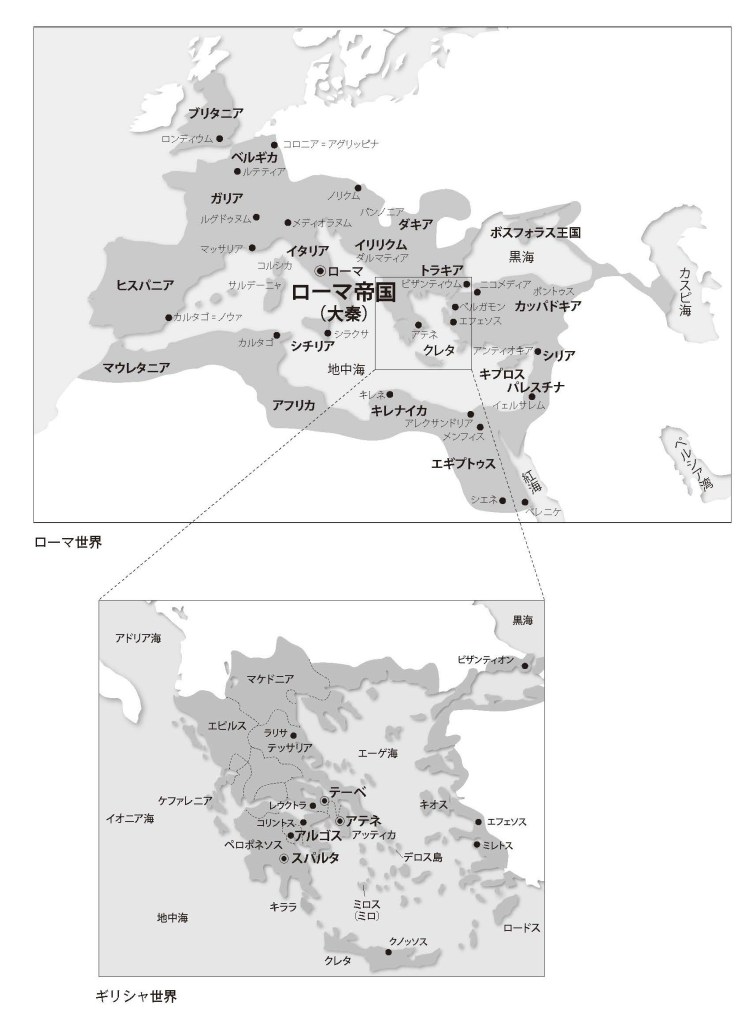
“The ancient Greeks never even considered (polises) coming together to form a great power” (Mariko Sakurai/Shunji Motomura, “Intensive Lectures! Greece and Rome,” Chikuma Shinsho, 2017, p. 154).
▼ Note: In Hayao Shimizu’s translation, the word “nation” is used instead of “ethnic group.”
 City Beautiful
Leave a comment