

“City Beatiful”, Issue 3
Essay
Following Hannah Arendt’s Theory,Let’s Discuss about the state and the family
Riken Yamamoto
Houses were surrounded by double walls.
A settlement is a place where people gather to live. Its appearance is called a settlement. Ancient Greek settlements were called polis.
A polis is a collection of houses. A house was called an oikos.
A polis was surrounded by a sturdy wall (The word polis originally meant something like a “circular wall”).The oikos was also surrounded by a sturdy wall.
In ancient Greece, this wall was called nemain. It is the verb form of nomos . Nomos means “law.” Nemain means “to divide” or “to allocate,” but it later came to mean wall and then law. The space within the walls of the polis was governed by the law of the polis. The space within the walls of the oikos was governed by the laws of the oikos. In other words, the oikos was a space doubly bounded by two walls: the walls of the polis and the walls of the oikos. In other words, it was a space governed by dual laws: the laws of the polis and the laws of the oikos.
Hannah Arendt focused on this point. Why do the words “law” and “wall” fall into the same category? Why was the oikos surrounded by dual walls and governed by dual laws?
The Wall Came First
The words “wall” and “law” share the same etymology; rather, the wall was the law.
This was because the polis was a colonial city. Many ancient Greek cities were acquired through colonial activity. When a city’s population exceeded a certain level, people migrated to new land in search of new territory. For this to happen, the colony’s design had to be completed before the migration began. In preparation for their migration, they honed their astonishingly meticulous surveying, architectural design, and civil engineering skills. This allowed them to make thorough preparations well in advance of their migration.
The Ionian polis of Miletus was their mother city. Many Greeks departed from here. They left their homes and boarded ships with great anticipation. The polis that awaited them was already designed, and construction of its walls, temples, theater, agora, and Prytaneion, where the civic assembly would be held, was already complete (or so they thought).
Each family’s land was determined by drawing lots, known as kleros. That’s why the land was called kleros. They built their homes on the lot they were awarded.
To ensure as much equality as possible between the residential lots determined by lottery, the polis adopted a grid plan. This ensured that the conditions of neighboring lots were roughly the same. The layout plan was designed with the utmost care to ensure that the settlers were not treated unfairly. There was only one rule in the design of the polis: equality among residents. The location of the polis, its surroundings, the planning and design of the agora, stoa, and oikos, were all carefully considered in advance. The temples were a testament to the designer’s skill, as anyone who saw them was overwhelmed by their majestic appearance.
The settlers followed the designer’s layout plan. In other words, the wall came first. This is what is meant when we say that the wall was the law.
The laws of the house and the laws of the city are mutually contradictory.
Why were the walls protecting the house double? It was because the laws of the house community of those living in the oikos and the laws of the city community that governed the polis were mutually contradictory. The law of the oikos is oikos-nomos. The law of the polis is polis-nomos. The space of the oikos-polis is a space ruled by a single patriarch. And the space of the polis-nomos is a space ruled by freedom and equality.
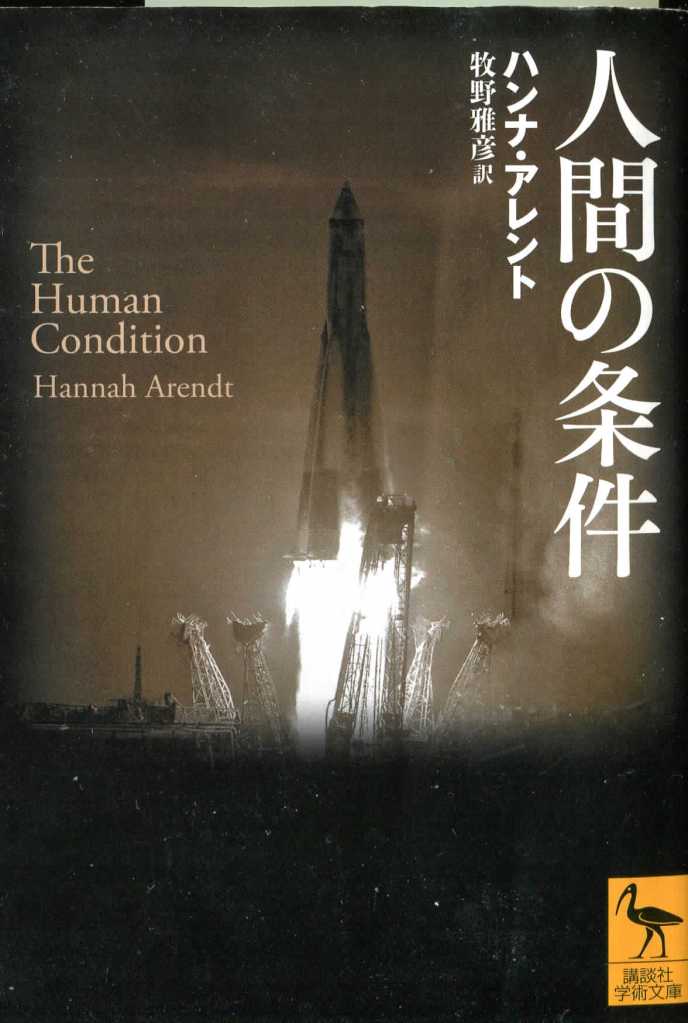
“To be political meant living in a polis, and living in a polis meant that everything was decided not by force or violence, but by words and persuasion. In the Greek self-understanding, coercing people through violence—commanding rather than persuading—was a pre-political way of dealing with people, specific to life outside the polis. That is, it was specific to the life of the home and family, where the patriarch ruled with absolute despotic power, and to the life of the barbarian empires of Asia, where this despotism often resembled the organization of the family.” (Hannah Arendt, “The Human Condition,” p. 47)
Political activity was an activity of verbal persuasion. Only citizens who owned a home within the walls of the polis could participate in this political activity, and owning a home was therefore a form of citizenship. In other words, only those who owned a home could participate in politics. Homeownership was a prerequisite for citizenship.
“Without a home, one cannot have a place of one’s own in the world [polis], and thus cannot participate in the affairs of the world [polis]” (ibid., p. 51)
“When a citizen was expelled, not only was his property confiscated, but the building itself was actually demolished” (ibid., p. 91-92)
Citizens were called politai, meaning “people of the polis.” Citizenship was limited to heads of households. Only heads of households who owned homes were eligible to be citizens of the polis. Those other than heads of households were called oiquetai, meaning “people of the oikos.” “Oiketai” has a slavish connotation[i].
“According to Greek thought, the human ability to create political organizations is not only distinct from, but in direct opposition to, the natural bonds centered on the household(oikia) and the family(oikos[ii]). The rise of the city-state meant that humans received ‘a kind of second life, a political life, in addition to their private life.’” (ibid., p.45)
“Within the familial sphere, there was no freedom. The ruling patriarch was considered free only because he had the power to leave the family and enter the political sphere, where all are equal.” (ibid., p. 54)
Arendt’s explanation of the relationship between the polis and the oikos possesses architectural clarity. Her explanation is architecturally spatial. Arendt’s explanation that the polis is the “public sphere” and the oikos is the “private sphere” is already highly architecturally spatial. Her method of explaining the abstract concepts of “public/private” through the interrelationship of the concrete architectural spaces of “polis/oikos” is architectural. This is an explanatory method unique to Arendt, and not found in other philosophers, but it is my own observation as an architect. It gives Arendt’s “public/private” theory persuasive power.
The polis is a space of freedom. And the oikos is a space of sole rule. Why sole rule? Because the head of the household was the only member of the family with citizenship. He was allowed to freely enter the public realm of the polis.
The public and private spheres were in conflict. The reason for this conflict was that the systems of rule (law) in each were completely different. The public sphere was a space ruled by speech. “Rulership by speech” was called respublica in Latin. Res means “consern”. Publicus means “of the people”(OALD).It means something like “deliberation by citizens.”. reppublica is republic. It is translated into Japanese as “republic state” but it should be translated as “republican system.” It is a form of government without a king or queen. It does not necessarily lead to a state.
On the other hand, the space known as the oikos was completely different from the space known as the polis. It was a space governed by the patriarch. Such a space was called the oikonomia.The origin of the word is oikos nomos, which means house, and nomos, which means law.This ancient term, based on modern terminology, is economy.
In other words, the oikos was a space under the sole control of the head of the family, a space that allowed the family to exist forever in a fixed place within the polis. Hannah Arendt called the process of giving birth to and raising children and maintaining that space perpetually the “circular life process.” The raison d’être of the family is to ensure the perpetual survival of the family itself. The oikos was a space in which the existence of a family could be passed on to the next generation, and then to the generation after that, and so on, so that the cycle of life could continue forever.
The family is the entity that perpetuates the circular process known as the “circular life process.” To do this, the family must obtain economic benefits for itself. In other words, the oikos is a space for the perpetuation of the family, and to achieve this, economic They were entities that had to obtain economic benefits.
The polis was a space for speech, while the oikos was a space for economic gain.
According to the ancient Greek interpretation, activities that gained economic gain were considered slavish, as the activities of the oikos were isolated from the activities of the polis. The oikos is the space of the oiketai. It is a space for slaves and women. On the other hand, the space of the polis is the space of the polis citizens (politai). It is a space of speech.
The space of the oikos and the space of the polis are completely different. For this reason, the space of the oikos was carefully separated from the space of the polis to prevent the economy of the oikos and the politics of the polis from mixing. The space itself was designed that way.
This is why the oikos was surrounded by a double wall.
The nation-state
– “public sphere and private sphere”
– “the sphere of the polis and the sphere of the oikos[iii]
– “ the activity related to the common world and the activity related to maintaining life”
“The crucial distinction between these two is a distinction that all ancient (Greek) political thought took for granted. … (Since the emergence of the worker in the 18th century) this boundary has become completely blurred. This is because we believe that human collectives and political communities are, in the end, nothing more than a kind of family that solves its daily problems through the householding(oikos-nomos) of a vast nation. The scientific thinking that responds to this changing situation is no longer political science, but “national economy ” or “social economy/Volkswirtschaft)” both of which mean a kind of “(collective householding).” In other words, it is the economic organization of a group of families that becomes an imitation of a single superhuman family that we refer to as a “society[iv]“.This is what Arendt calls a ‘society,’ and its political organizational form is what he calls a ‘nation[v]” (ibid., p. 49-50)
The politics of the polis are the relationship between the polis and the family. In this context, the father participated in polis politics as the head of the household. The father/mother relationship is the relationship between man and woman in the natural state, but replacing it with the head/housewife relationship required the intervention of polis law (nomos). Only then was the family recognized as the fundamental unit that constitutes the city of the polis. The father became a citizen, and in the name of the citizen, the father became the head of the household.
Arendt argues that this pattern is extremely robust, continuing from ancient Greece through the spatial structure of medieval cities and into the urban structure of the18th century.
This pattern broke down in the 19th century. With the emergence of workers, the family became the fundamental unit of the national economy, not just the city. At that time, the “nation-state (The new concept of “nation” was invented. The existence of the nation-state was no longer based on ideology (freedom and equality) like the city-state (polis), but was instead based on the origins of the “nation” (which is an illusion). And as Arendt says, the “nation” is indeed an imitation of the family. This is because the “nation-state” cannot explain the reason for the existence of the “nation” unless it is modeled on the family.
In ancient Greece, the reason for the family’s existence was clear: its permanence. The human group known as the family was meant to connect that family to the world forever. The family’s mission was to ensure its survival within the polis. To ensure the family’s perpetuity, economic benefits for that family were paramount. Each family had to create and protect its own assets. Arendt’s view is that with the emergence of the nation-state, this family mode of existence transcended the family and became the mode of existence for the “nation.” The mission of the “nation” is the perpetuation of the “nation” and its economic benefits. If the state is run for the economic benefit of the nation, it can no longer be called political activity. The “national economy ” is an economic activity.
This observation is correct even from an architect’s perspective. Housing architecture changed dramatically from the 19th century to the 20th century.
The existence of the worker was “invented” in the 19th century, and entering the 20th century, almost all housing was provided as workers’ housing. Cities became the property of workers. However, workers’ housing was excluded from the city center, and the city center became a place where facilities contributing to the national economy were concentrated. The areas where workers’ housing was built were called “suburbs,” and their living spaces were not only not places of economic activity, but were completely excluded from economic activity.
They were simply places to “eat and sleep.” It became a place for “sexual phenomena[vi]” and for “raising children”. From the perspective of the ancient Greeks, it was a space separated from the “world.”
Families were distanced from the “world” and confined within their homes[vii].
Japan today is a slave society.
This is the relationship between the polis and the oikos as sketched by Arendt. Using the image of the family in ancient Greece as a baseline, Arendt clearly describes how families in modern society relate to the nation-state.
Arendt also well understood that architectural space is deeply intertwined in this relationship.
“All human activity is conditioned by the fact that people (“men live together”[viii] (ibid.43p).
In other words, “living together” is a condition for human vitality. “Human vitality” refers to political activity. Unlike animal societies, human society is the only one in which political activity through discourse is possible. To achieve this, we need a space to live together.
Today, as Arendt correctly points out, the economy refers to the national economy. However, a family’s daily life has absolutely no connection to the national economy. In fact, the home where a family lives is simply a place for consumption. While a home is the site of a family’s “circular life process,” the funds to maintain it are not earned through the family’s own business, but are distributed by the state. The basis for distribution is labor. It’s the hours you work. Of course, you receive your salary from your company. However, the standards for this are set by the state.
Arendt says that since the 19th century, all citizens have been paid according to the hours they work, and this is precisely the kind of society we have in Japan today. How did this come about? Because people have come to live under the assumption that all residents of homes are wage laborers, and many residents take this for granted. Residents are workers who work for the national economy, simply waiting for their share of the income from the state.
I wonder what the ancient Greeks would say if they saw modern-day Japanese society. I imagine they would be amazed at what a country with so many slaves.

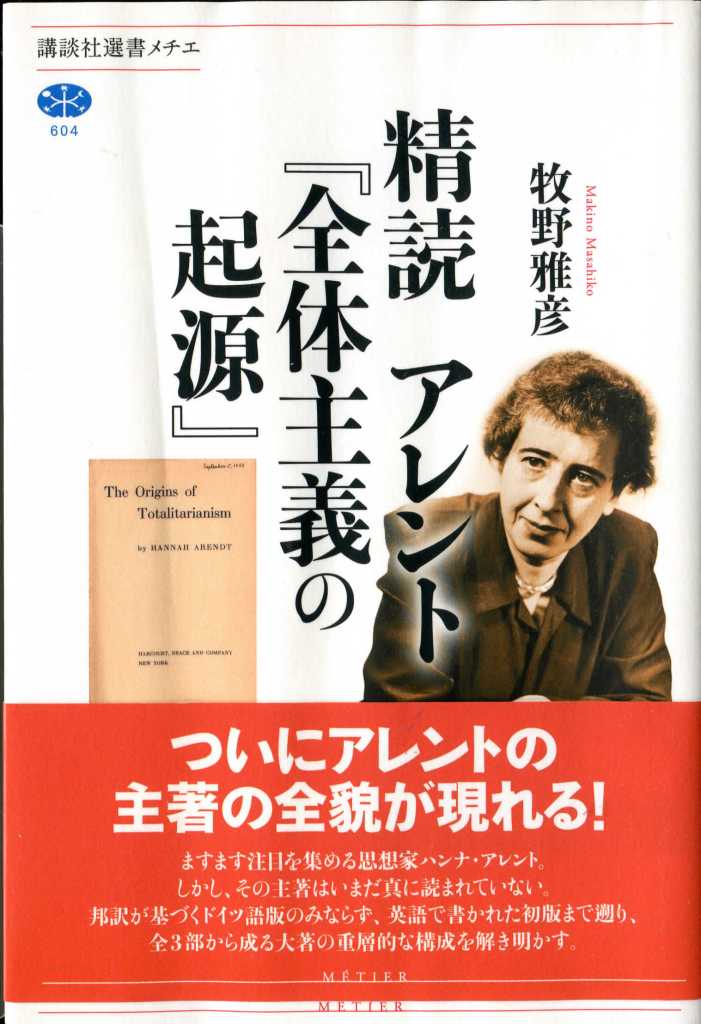
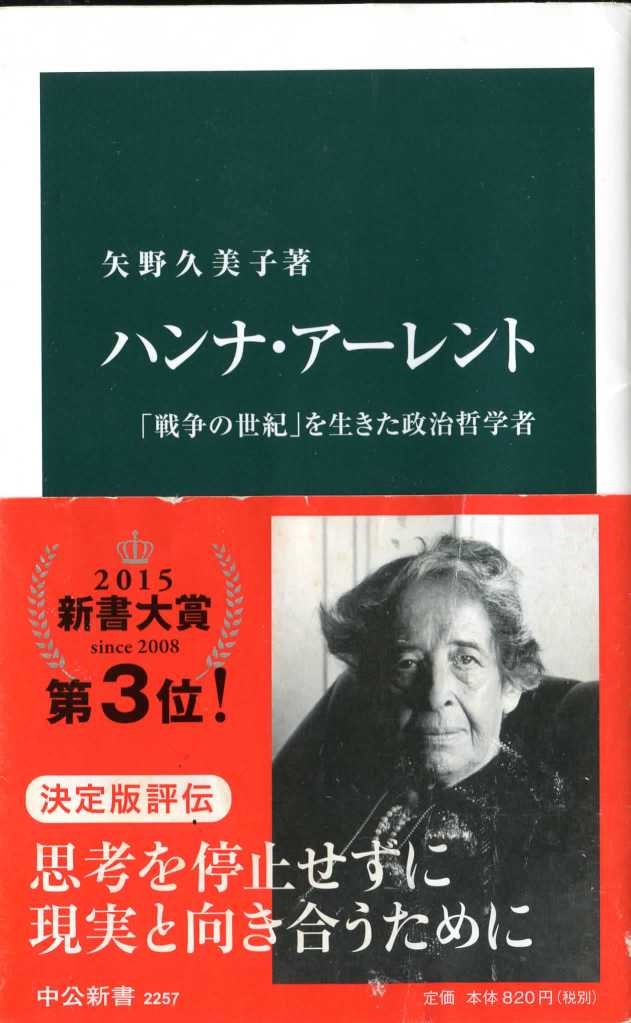
[i] The word “slave” was used in a completely different way than it is in modern society. A slave was someone forced to perform slavish duties. Slaves performed a variety of occupations. Slaves were members of other ethnic groups defeated in war and purchased with money in slave markets. Skilled slaves fetched high prices and were favored. Although the term “slave” is used broadly, in reality, slaves performed tasks such as housework, childcare, education, farm work, livestock farming, and even the sale of manufactured goods. Slaves also served as police officers and city cleaners, providing security for the polis. Slaves also served as council clerks. Jury selection was also a task for court cases. Child tutors were called paidagogos (English: education), servants were called therabones, prostitutes were called porne or hetaira, public slaves were called demosions, and flute players were called auretoris. The list is endless, almost identical to the diversity of workers in modern society.
[ii] Difference between oikia and oikos. Oikia is a space for women and slaves (oiquetai). It was a space to protect the privacy of the family. Oikos is a word that refers to the entire house. It can be interpreted that way from an architectural perspective.
[iii] In Hayao Shimizu’s translation, it is translated as “family,” It includes not only but also (slave-like cohabitants). but it include household, So, it is written as oikos.
[iv] “society” is the Japanese translation, but Arendt’s use of this word is unique. Arendt uses “society” as the antonym of a society like the ancient Greek polis in contrast “world” which refers to the working-class society that emerged after the Industrial Revolution. This classification is extremely confusing. The Japanese word “society” has become a general term referring to people’s living space.
[v] In Hayao Shimizu’s translation, is translated as “nation,” but according to the context, it should be “ethnic group”. The word is commonly translated as “nation” (kokumin) in Japanese, but this is not necessarily accurate. Only when an ethnic group, together with its territory, is recognized as a nation by other ethnic groups (when there is mutual recognition) can its inhabitants be called citizens, not the other way around. Seki Hiroya pointed this out 2000 years ago (“What is an Ethnic Group?” Kodansha Gendai Shinsho, 2001, p.15).
[vi] “Sexual phenomenon” is the Japanese translation of sexuality (sexual behavior, sexual desire). “The only recognized site for sexual phenomena, both in social space and within the confines of each household, is the useful and productive one: the parents’ bedroom.” (Michel Foucault, “The History of Sexuality I: The Will to Knowledge,” translated by Moriaki Watanabe, Shinchosha, 1986, p. 10)
[vii] “They can be happy within the four walls of their own home, surrounded by their wardrobes and beds, their tables and chairs, their dogs, cats, and vases.” (The Human Condition, p. 78)
[viii] Shimizu’s translation uses the word “symbiosis(kyosei)” but this translates to the biological meaning of ” symbiosis “
 City Beautiful
Leave a comment